The I Ching: A Timeless Oracle of Wisdom
Origins in Ancient China
The I Ching, or Book of Changes, is one of the oldest and most revered texts in human history. Its roots trace back over 3,000 years to the Zhou Dynasty (1046–256 BCE), though its symbolic system may have even earlier origins in the Shang Dynasty (1600–1046 BCE).
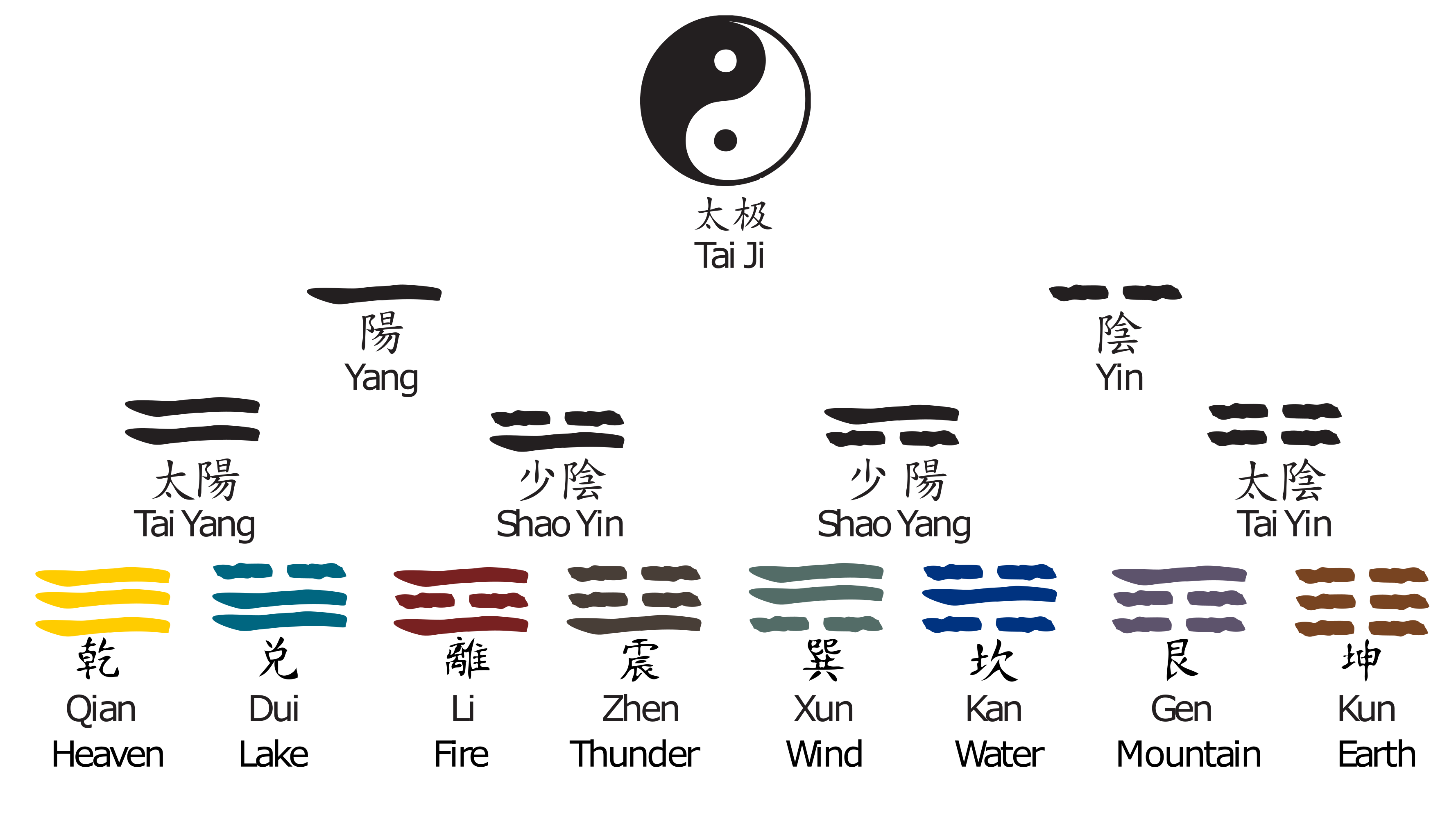
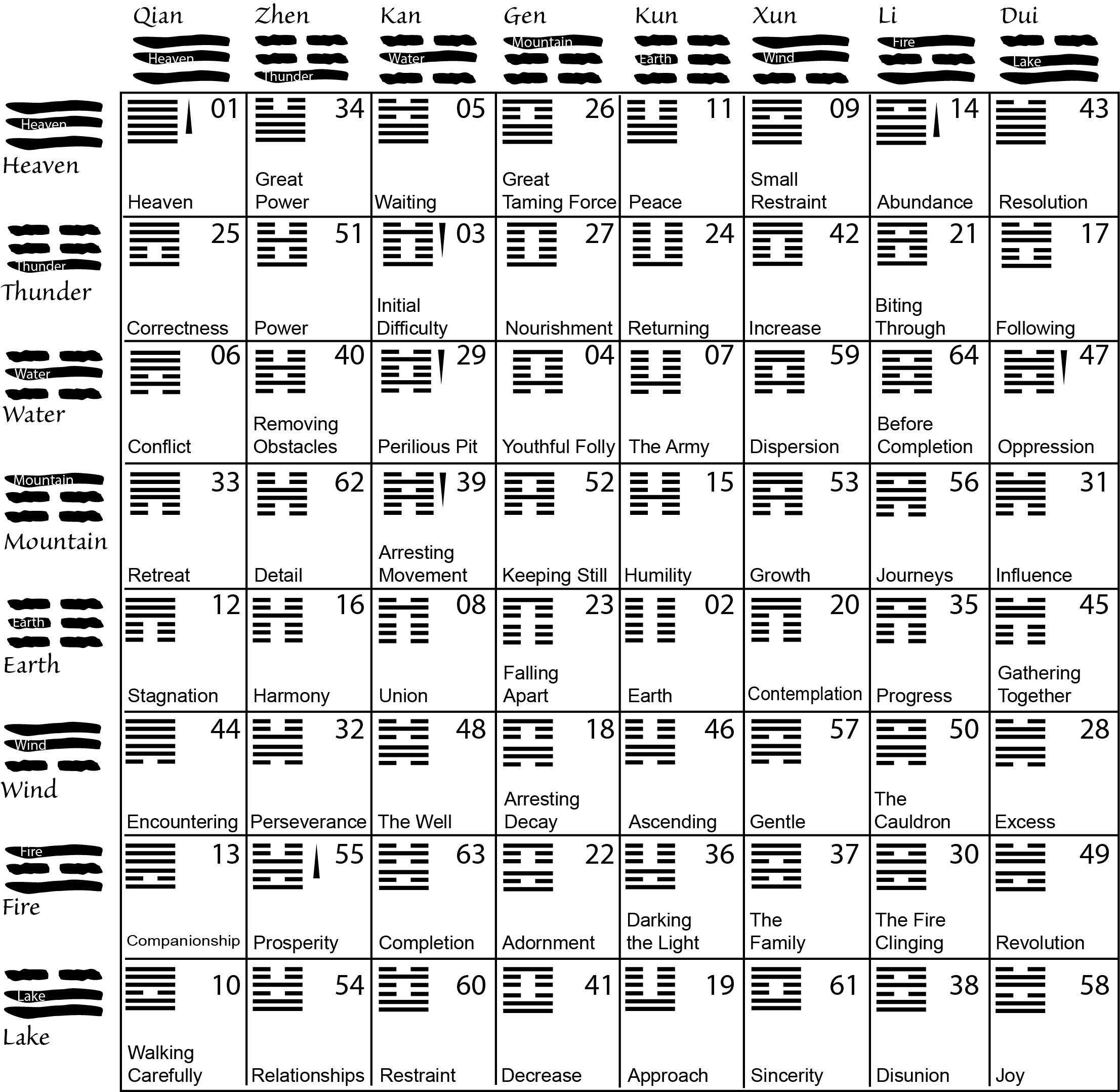
- Divination Beginnings: Initially used as a divination tool, early versions involved reading cracks in heated tortoise shells or animal bones (oracle bones). Over time, this evolved into a system of hexagrams (six-line symbols) made up of broken (yin) and unbroken (yang) lines.
- King Wen & the Zhou Dynasty: Tradition credits King Wen, founder of the Zhou Dynasty, with arranging the 64 hexagrams and composing their core judgments while imprisoned by the Shang tyrant Zhou Xin. His son, the Duke of Zhou, later added commentaries.
Confucius & the Philosophical Transformation
By the Warring States period (475–221 BCE), the I Ching had shifted from a purely divinatory text to a philosophical masterpiece. Confucius (551–479 BCE) and his followers reportedly wrote the Ten Wings (Shi Yi), appendices that expanded the I Ching into a guide for ethics, governance, and cosmic harmony.
“If I had fifty years to spare, I would devote them all to the study of the I Ching.”
~ Attributed to Confucius
The Taoist Connection
While Confucian scholars emphasized its moral teachings, Taoist sages like Laozi and Zhuangzi saw the I Ching as a map of the universe’s natural flow (Tao). Its interplay of yin and yang and the concept of perpetual change (Yi, 易) became central to Taoist thought.
Spread to the West
The I Ching entered Europe in the 17th century through Jesuit missionaries, but it wasn’t until the 20th century that it gained global fame:
- Richard Wilhelm’s 1923 German translation (later rendered into English by Cary F. Baynes) became the definitive Western version.
- Carl Jung praised the I Ching as a tool for exploring synchronicity and the unconscious mind.
- Counterculture Embrace: In the 1960s–70s, it became a symbol of Eastern wisdom for thinkers like Alan Watts and Philip K. Dick.
The I Ching Today
Modern applications range from psychology (Jungian analysis, decision-making frameworks) to business strategy and personal growth. Unlike static fortune-telling, it’s a dynamic mirror of change, teaching:
- Wu Wei (“effortless action”): Aligning with natural rhythms.
- Adaptability: Embracing life’s cycles.
- Self-Reflection: Revealing inner patterns.
Why the I Ching Endures Its longevity lies in its universality, it’s been a shaman’s tool, a philosopher’s compass, and a scientist’s inspiration (Leibniz even saw binary code in its hexagrams!). At its core, the I Ching reminds us: “The only constant is change.”
Do you want to try a CONSULTATION, first we make an appointment, formulate the question or not, grab a cuppa tea and lets do it.